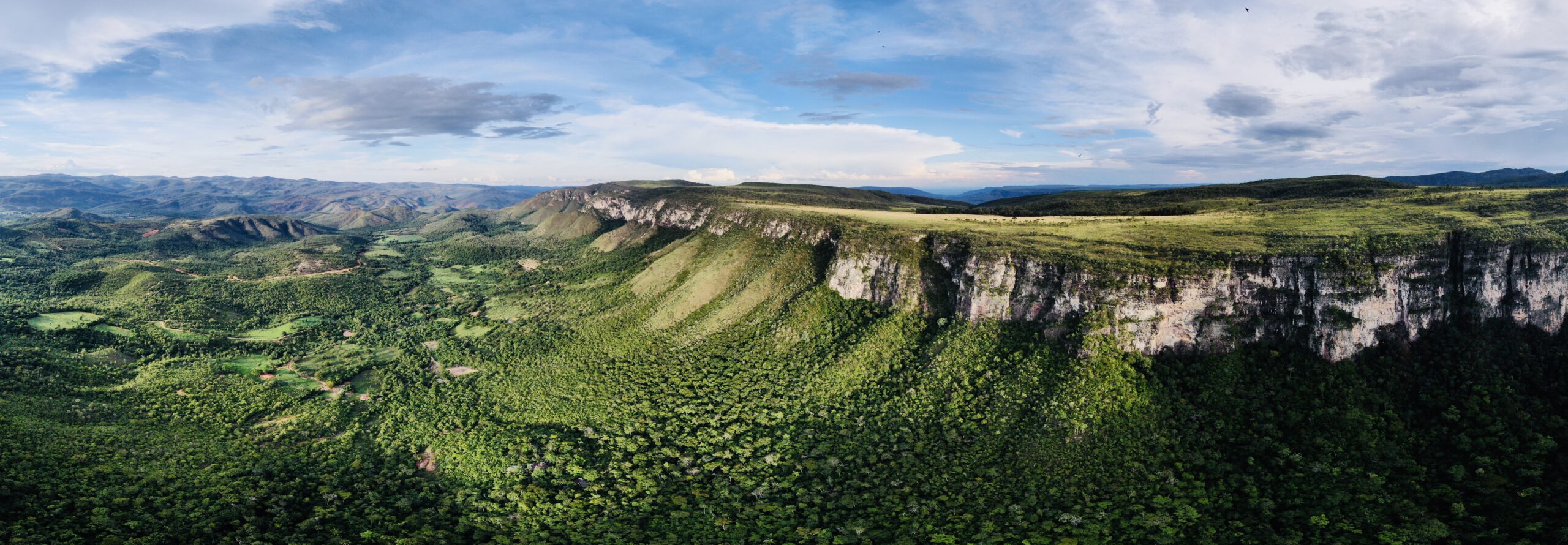
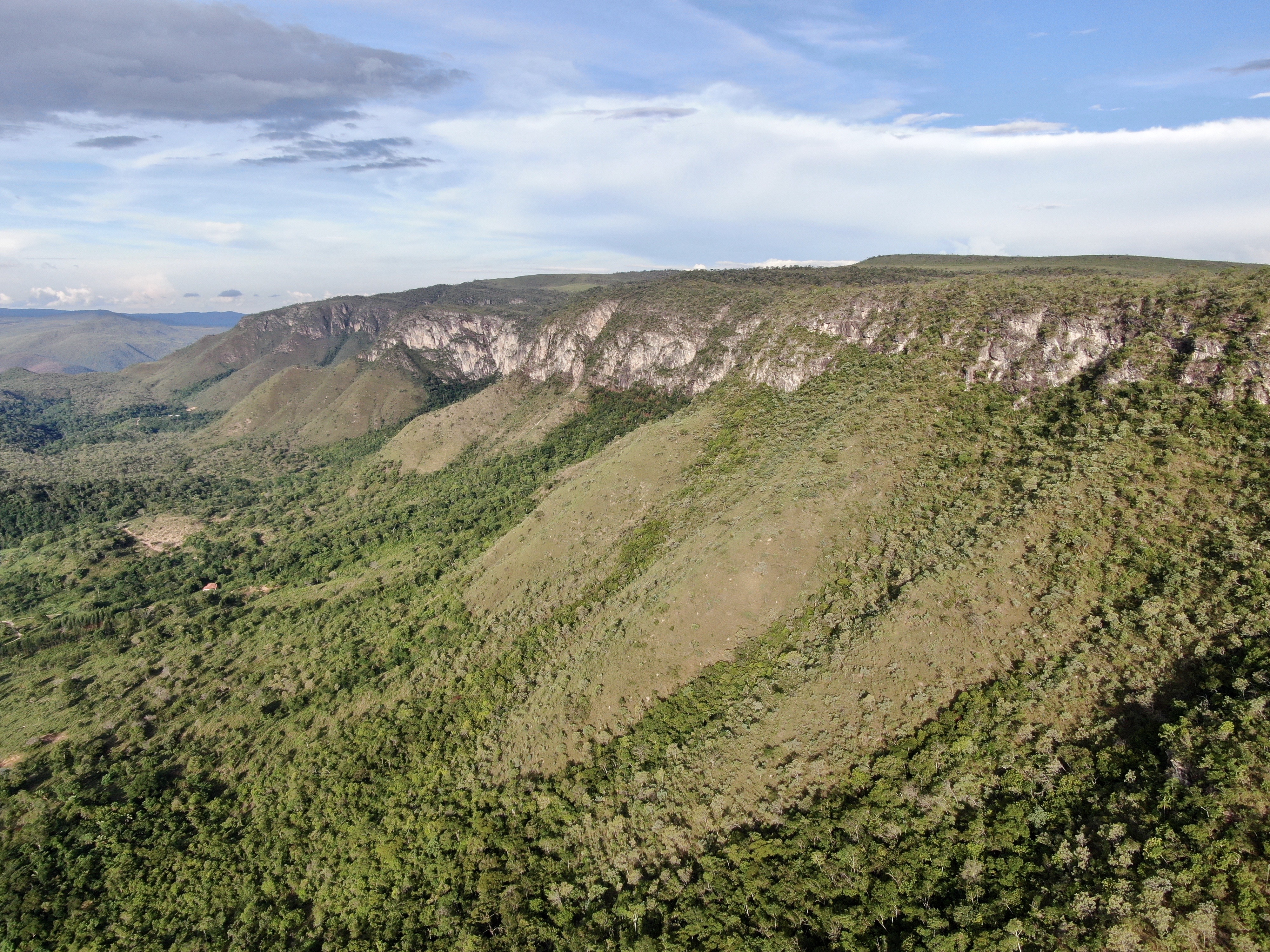
The Chapada dos Veadeiros National Park, created in 1961, protects an area of approximately 240,611 hectares and is located in the Cerrado biome, in the state of Goiás, Brazil. In this park, we find several plant formations, hundreds of springs and watercourses, as well as rocks that are more than a billion years old. Its landscapes are of rare beauty, with features that change throughout the year.
The Park also preserves areas of old mining sites, forming part of local history. It was declared a World Natural Heritage Site in 2001 by UNESCO. In addition to the conservation of biodiversity and geodiversity, the park’s objectives are scientific research, environmental education, and public visitation. Hiking and waterfall bathing are the main activities in the Park, allowing visitors to explore the immense landscapes of Chapada on a journey through the Brazilian Cerrado along ancient routes used by miners. The park’s fauna is diverse and is home to a wealth of species adapted to the Cerrado, one of the most biodiverse biomes in the world. The primates that inhabit the region are capuchin monkeys (Sapajus libidinosus), black-tufted marmosets (Callithrix penicillata), and howler monkeys (Alouatta caraya).

As part of the Capcult project, Neoprego researchers mapped nut-cracking sites in various park regions in 2019. Finally, they found a location in the recently expanded park area with groups frequently using stone tools. This area on the park’s edge belongs to the Mariri Jungle Lodge and Mariri Wildlife Sanctuary, which have aligned interests with Neoprego and provide logistical support for our research.

In the following years, camera-trap monitoring was carried out at the cracking sites in the Mariri area, where we monitored the use of stone tools over a long time to understand the differences across populations in the nut-cracking. Additionally, field experiments to determine whether monkeys use other types of tools were also carried out here by the Neoprego team.
REFERENCES:
- https://www.icmbio.gov.br/parnachapadadosveadeiros/
- Falótico, T., Valença, T., Verderane, M. P., & Fogaça, M. D. (2022). Stone tools differences across three capuchin monkey populations: food’s physical properties, ecology, and culture. Scientific Reports, 12(1), 14365. https://doi.org/10.1038/s41598-022-18661-3